Ask ten recruiting leaders where hiring goes wrong and most will point to the same place: the hiring manager rejected candidates who looked right on paper, the feedback took nine days to arrive, and by the time everyone agreed on what they were actually looking for, two finalists had accepted somewhere else.
So the industry built tooling to fix feedback. Faster scorecards. Automated reminders. Interview notes piped into the ATS. Debrief summaries. All of it useful, and all of it aimed at the same moment: after the interview.
But that is not where misalignment is created. It is created on the first conversation, before a single candidate is sourced.
The intake call is the least documented conversation in hiring
Think about how much of your process is captured. Applications, tracked. Screens, recorded. Panel interviews, transcribed and scored. Offers, versioned and approved.
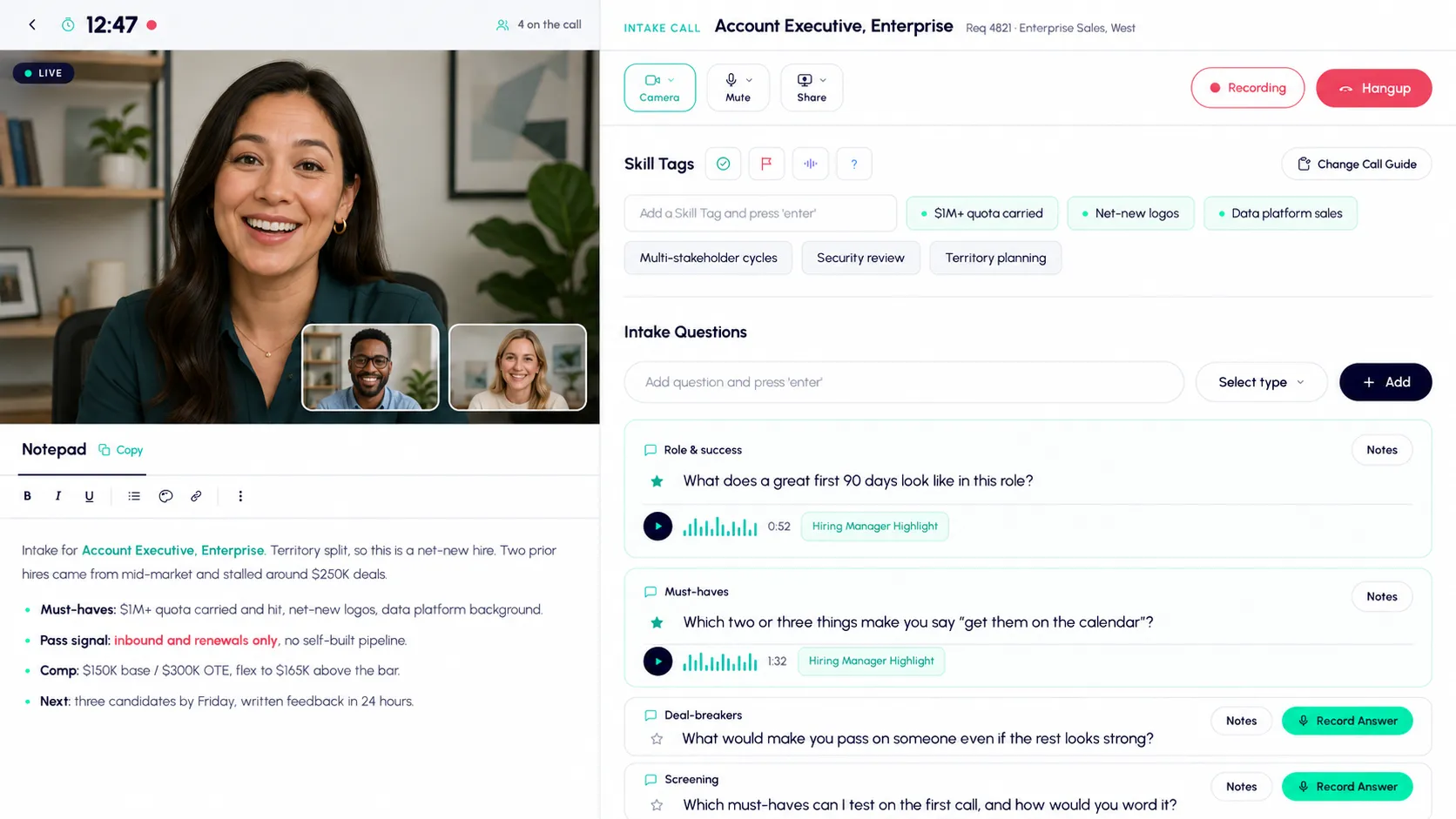
Now think about the intake call. Thirty minutes with a hiring manager, usually on a calendar invite titled "kickoff," usually captured as bullet points in a notebook, and usually summarized into a job description that strips out everything that made the conversation useful.
The hiring manager said the last person in this role failed because they could not push back on engineering. That did not make the job description. They said they would trade three years of experience for someone who has shipped in a regulated environment. That did not make the job description either. They described, in their own voice, the problem this person is being hired to solve, and that description is the single most persuasive thing you could put in front of a candidate.
Then the call ended, and all of it went away.
Alignment is a definition problem before it is a feedback problem
Here is the test for whether your team is aligned on a req. Ask four people to describe the role in two sentences: the recruiter, the sourcer, the hiring manager, and if you are working with one, your agency or RPO partner.
If those four answers do not match, no amount of faster interview feedback will save the search. You are collecting high-quality signal against the wrong definition. Every screen is measuring something slightly different. Every submission is a guess at what the hiring manager meant.
Alignment is not agreement about a candidate. It is a shared, specific, retrievable definition of what you are looking for, established on the first call and available to everyone who touches the req afterward.
That is a solvable problem, and you are already doing most of the work. Here is what it looks like end to end on one req.
Step 1. Talk to the hiring manager
The call itself does not change much. You are still asking about the role, the team, the timeline. What changes is the order of the questions.
A good intake guide is built to surface trade-offs, not collect requirements. Anyone will tell you they want deep technical fluency and strong commercial instincts. The useful question is which one advances when they have to pick. Every requirement on a job description is a must-have until you ask which one goes first.
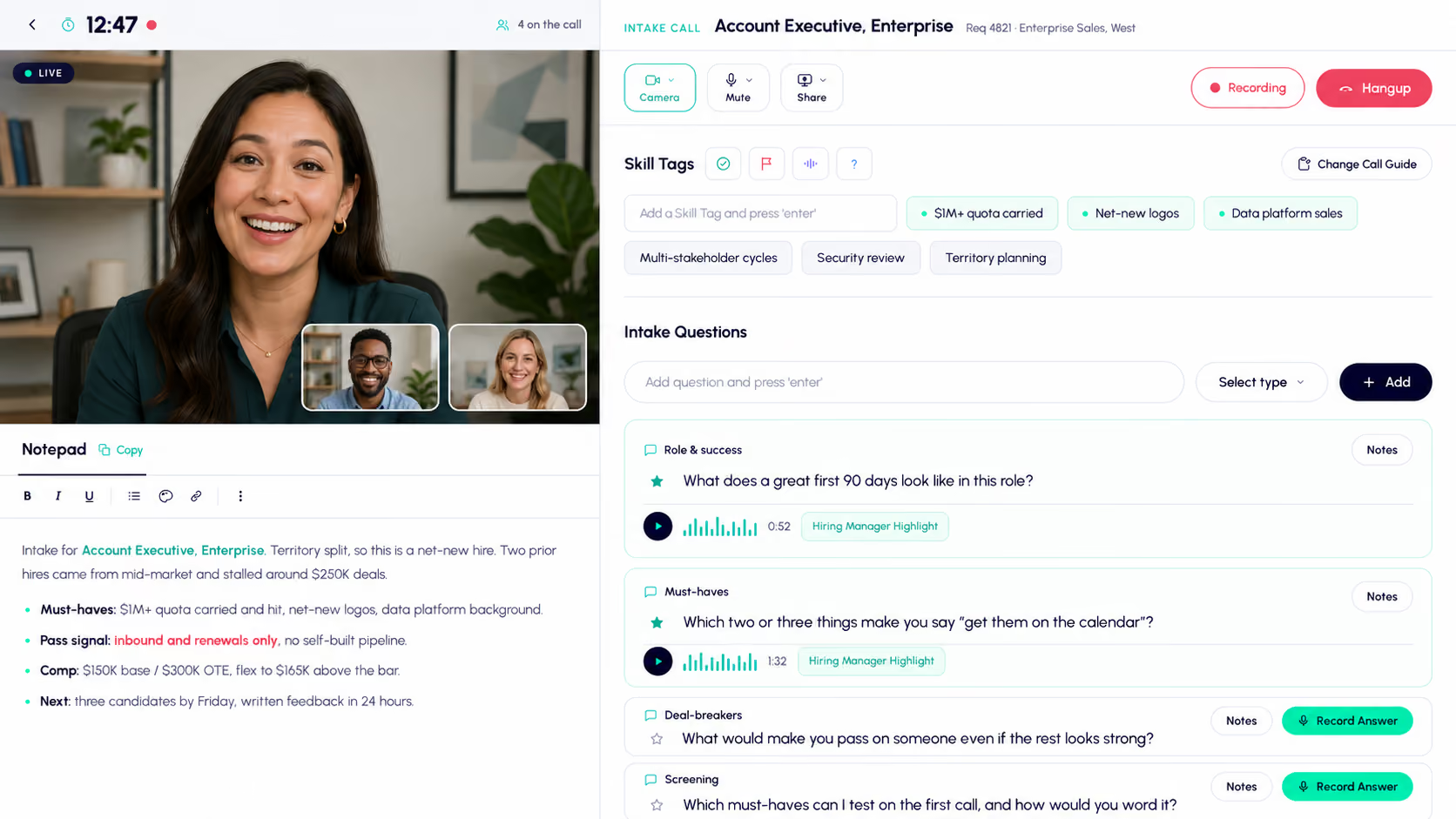
That guide is the one used for the SDR req in this article. Ungated, and worth reading even if you never talk to us, because the sequencing is the point.
Step 2. Keep the intake conversation
This is the part that has been missing. Honeit captures intake calls with transcript, soundbites, summary, highlights, skill tags, and recruiter notes captured from a hiring manager conversation.
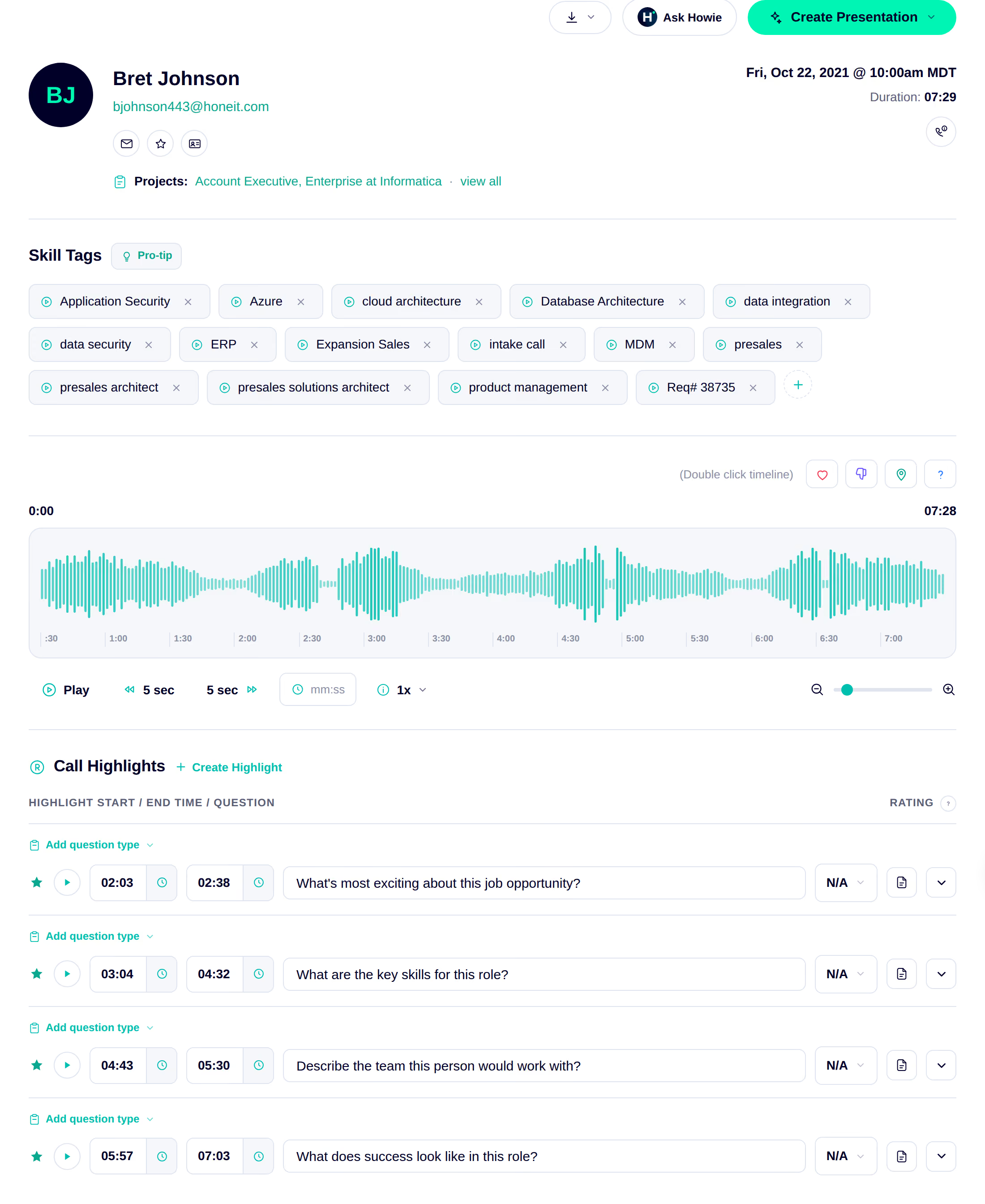
Transcript. Soundbites. Summary. Highlights. Skill tags. Notes. Not a recording sitting in a folder, but a structured data set built from what the hiring manager actually said, in the order they said it, with the reasoning intact.
This matters more than it sounds. A summary tells you the hiring manager wants someone who can influence engineering. The soundbite tells you why, in the voice of the person whose opinion decides the hire. Those are different artifacts, and only one of them survives contact with a skeptical sourcer.
It also means the definition of the req no longer lives in one recruiter's head. When the search gets reassigned, when a second recruiter picks up overflow, when your RPO partner joins in week three, they get the actual conversation instead of a briefing document that flattened it.
Step 3. The intake call outputs build themselves
From that one data set, two things come out.
A screening call guide, specific to this req. Not a template for the job title. The competencies the hiring manager named, the trade-offs they accepted, the failure mode they described, turned into the questions your screens will ask. Every recruiter and sourcer on the req works from the same guide, so every candidate is measured against the same definition.
A candidate-facing job presentation. The same conversation, edited for the outside. A candidate weighing three opportunities hears the person they would report to describe the problem, the team, and why this role exists right now.
Caption: Meet the hiring manager, in her own words. This is what a candidate hears before the first screen.
That is a different artifact from a job posting, and it converts differently, because it is real. Same call. You just stopped throwing it away.
Step 4. Put the job in front of the right people
The presentation goes out in one click, to LinkedIn, X, Facebook, email, or Slack, or embedded directly in the job posting. It ends on a single action you choose: apply, or schedule a screening call with the recruiter. No form to abandon on the way.
And unlike a job posting, you find out what happened.
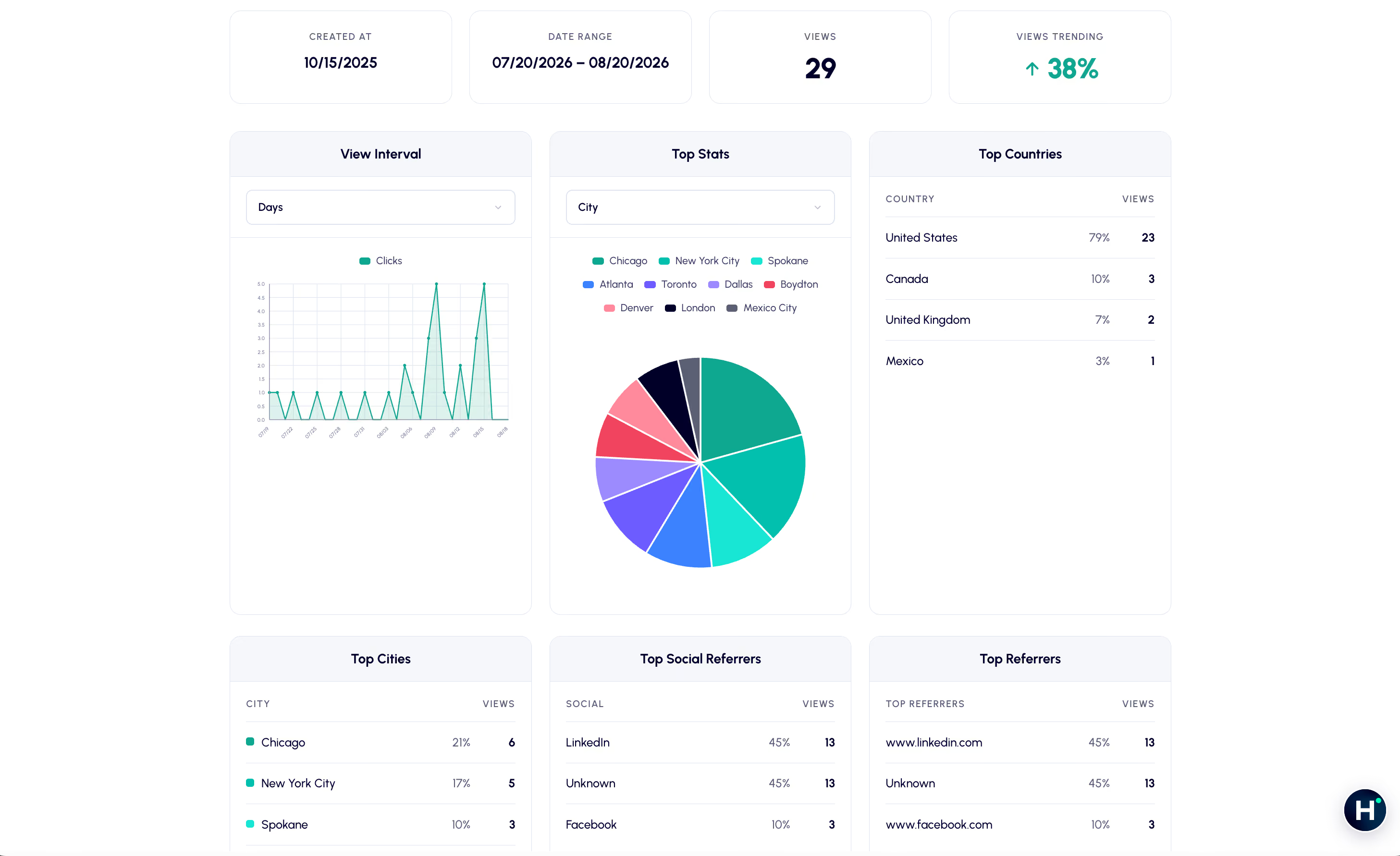
When a recruiter can see that the presentation pulled thirty listens from one LinkedIn post, and that a third came from the metro where the role sits, that is not vanity data. It tells you whether the way you defined the role is landing with the people you want, which is the same question the intake call was asking. The loop closes.
5. Better conversations, fewer interview rounds
Now the first candidate call is a real conversation. The recruiter is asking the questions the hiring manager would ask, because they came from the hiring manager. The candidate has already heard the role described honestly, so the call starts past the part where both people establish what the job is.
That call gets captured the same way, and the submission that follows carries the answers rather than a summary of them. The hiring manager hears the candidate respond to the exact trade-off they raised on the intake call, with a scorecard against the competencies they named.
This is where interview collaboration stops being a feature and becomes an outcome. The hiring team is not collaborating on a document about a candidate. They are working from the candidate's own answers, against a definition everyone agreed to before sourcing began. Rounds that existed only to re-establish alignment stop being necessary, because alignment was never lost.
What this looks like above one req
For a single search, better intake means a better screen and a faster fill. The compounding value shows up above that.
When intake calls are structured and captured across a team, recruiting leaders can see which reqs were properly defined and which were not, which hiring managers hold a consistent definition and which move the target, and where a search actually started drifting. That is a different kind of visibility than interview analytics provide, because it looks at the origin of the req rather than the quality of the interviews downstream.
For RPO and agency teams, it is also a client deliverable. An intake call that produces a documented definition, a screening guide, and a shareable job presentation is evidence of the work. It answers the "what are we paying for" question before it is asked, and it makes the eventual submission legible, because the client can hear the connection between what they asked for and what they got.
Start where hiring starts
Recruiters do not need another tool that watches interviews and reports back on them. They need the first conversation to count for something.
When recruiters conduct skills-based and competency-based interviews on the first call with a candidate, recruiters are irreplaceable. The same is true one level earlier. When recruiters run a real intake conversation and keep it, they stop guessing at what the hiring manager meant, and the hiring manager stops rejecting candidates for reasons nobody wrote down.
Bring us one req. We will run the intake call with you, and you will leave with the call guide, the captured conversation, and the job presentation.
Schedule a Honeit Demo to see the Intake Call experience.