Most hiring processes are built like a relay race. The intake call with the hiring manager happens over here. The screening call with the candidate happens over there. The candidate submission is a resume forwarded with a one-line note. Each step is treated as its own event, handed off and forgotten.
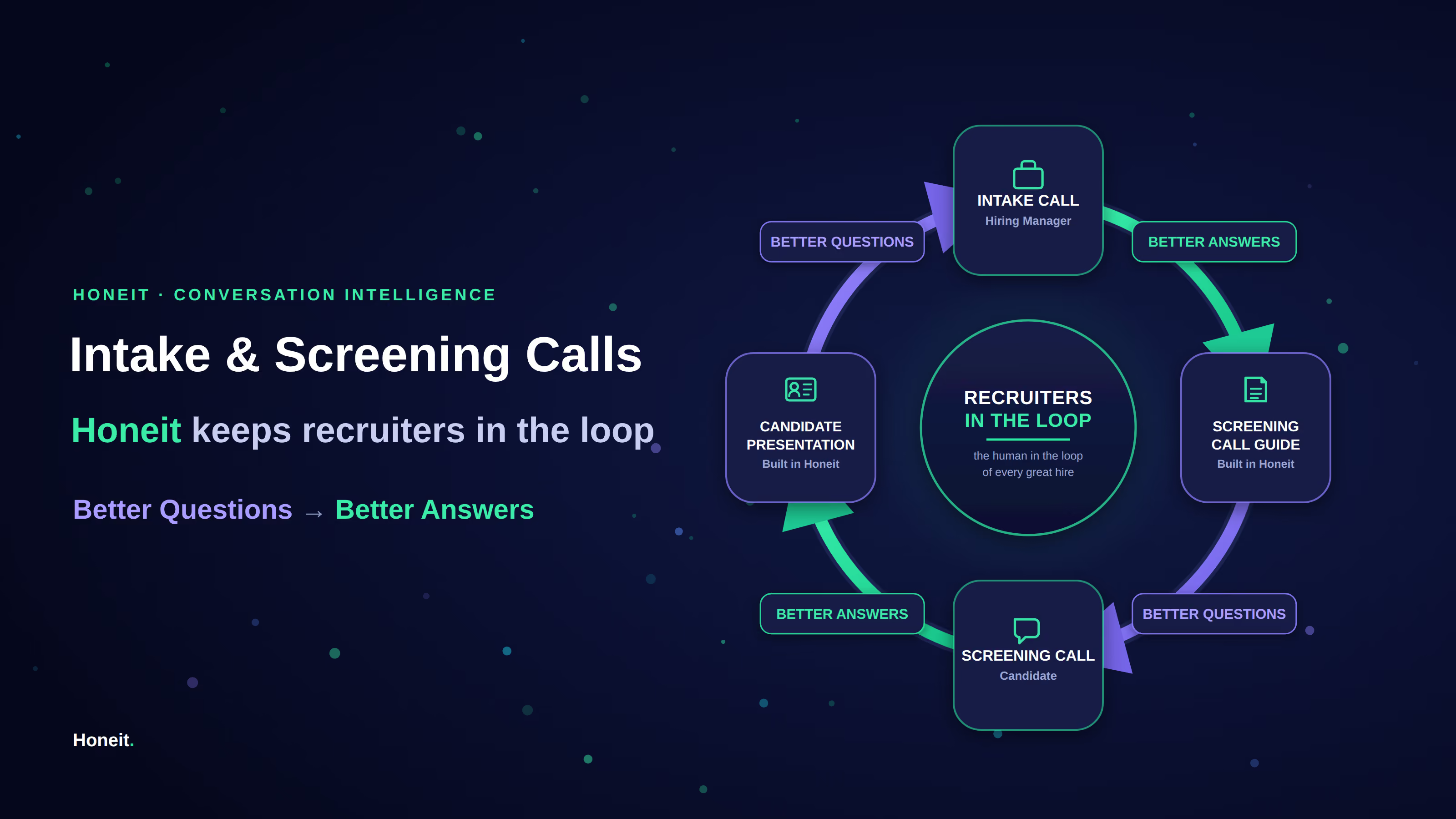
But the best recruiters have always sensed something the org chart doesn't show: these conversations aren't separate at all. What you learn on an intake call shapes every question you ask a candidate. What a candidate tells you should sharpen the next conversation you have with the hiring manager. Done well, recruiting isn't a straight line from req to offer. It's a loop — and every turn of that loop makes the next one better.
At Honeit, we call it the recruiting conversation loop. Once you see it, you can't unsee it.
It starts with better intake calls
Everything downstream depends on the quality of the intake call. And the quality of the intake call depends on one thing: the questions the recruiter asks the hiring manager.
Weak intake calls sound like a form being filled out. Years of experience? Tech stack? Salary band? Those questions produce a job description, not an understanding of the role. Strong intake calls dig into what actually separates a great hire from a good one — the real problems the person will solve in their first 90 days, the projects that stalled without them, the traits that made past hires succeed or fail on this exact team.
Better questions to the hiring manager produce better answers about the role. And those answers are gold. Instead of letting them evaporate the moment the call ends, capture them. In Honeit, the answers from an intake call become the raw material for the next step in the loop.
Better intake calls lead to better screening calls
Here's where most tools stop and Honeit keeps going. The insights from a great intake call shouldn't live in a recruiter's memory or a scattered set of notes. They should become a screening call guide — a req-specific set of questions built directly from what the hiring manager told you matters.
This is the first handoff in the loop: the output of the intake call (great answers) becomes the input to the screening call (great questions). The recruiter walks into every candidate conversation already calibrated to the role, armed with the exact questions that will surface signal instead of small talk.
No more generic screening scripts. No more "so, tell me about yourself" as a stand-in for a plan. The guide is built for this req, from this hiring manager's answers, to find this candidate.
Better screening questions lead to better answers
Armed with sharper questions, the screening call changes character. Instead of confirming what's already on the resume, the recruiter surfaces the things a resume can never show: how a candidate thinks, how they've actually solved the problems the hiring manager cares about, what they're looking for next, and whether the fit is real.
And just like the intake call, those answers are too valuable to lose. The best moments in a screening call — the candidate explaining a hard decision in their own words, the story that proves they've done this before — are exactly what a hiring manager needs to hear. In Honeit, they're captured, not paraphrased.
Better candidate presentations lead to better feedback
This is where the loop pays off in a way hiring managers immediately feel. Instead of forwarding a resume and a hopeful sentence, the recruiter sends a candidate presentation — the candidate's real answers, scored responses, and interview highlights, packaged as a shareable submission.
The hiring manager isn't reading between the lines of a bullet-point resume anymore. They're hearing the candidate respond to the exact questions that came out of their own intake call. The submission answers the questions they were going to ask anyway. That's not a resume with extra steps — it's a fundamentally better way to present a human being for a job.
And when the hiring manager reacts to that presentation, the loop closes. Their feedback — "this is exactly right," or "I didn't realize how much depth mattered here" — calibrates the next intake conversation. The questions get tighter. The next candidate is even better matched. Every loop sharpens the one that follows.
Better questions, better answers, better hires!
Strip the loop down to its core and it's a simple rhythm: better questions in, better answers out. Better questions to the hiring manager produce better answers about the role. Better answers build better questions for candidates. Better questions to candidates produce better answers for the hiring manager. And better answers to the hiring manager produce better questions on the next intake call.
Around and around — and critically, the loop doesn't just repeat, it improves. Calibration that used to take three or four failed submissions can happen after a single turn. The feedback that used to arrive weeks later, buried in a rejection, arrives instantly and flows straight back into the questions. That's the difference between a process that spins and a process that compounds.
Keeping recruiters in the loop
There's a bigger reason this matters right now. As more of hiring gets automated — resume screens, chatbots, one-way video, AI ranking — the industry is rediscovering an old truth: the human in the loop is what makes the outcome trustworthy. In hiring, that human is the recruiter.
The recruiting conversation loop puts the recruiter exactly where they belong — at the center. Not typing notes into seven systems. Not chasing hiring managers for feedback that never comes. But doing the one thing software can't: having real conversations, asking the questions that matter, and carrying context from one conversation to the next.
Honeit's job isn't to replace those conversations. It's to capture them, structure them, and connect them — so the recruiter's judgment compounds instead of evaporating. Better intake calls, better screening calls, better candidate presentations, better hires. It's one loop, and the recruiter is what holds it together.
Connect the conversations, and you don't just fill the req. You get better at filling every req that comes after it.
Honeit is the conversation intelligence platform for recruiting teams. Turn intake calls into req-specific screening guides, capture real candidate answers, and send complete candidate presentations — not just resumes. Request a demo.