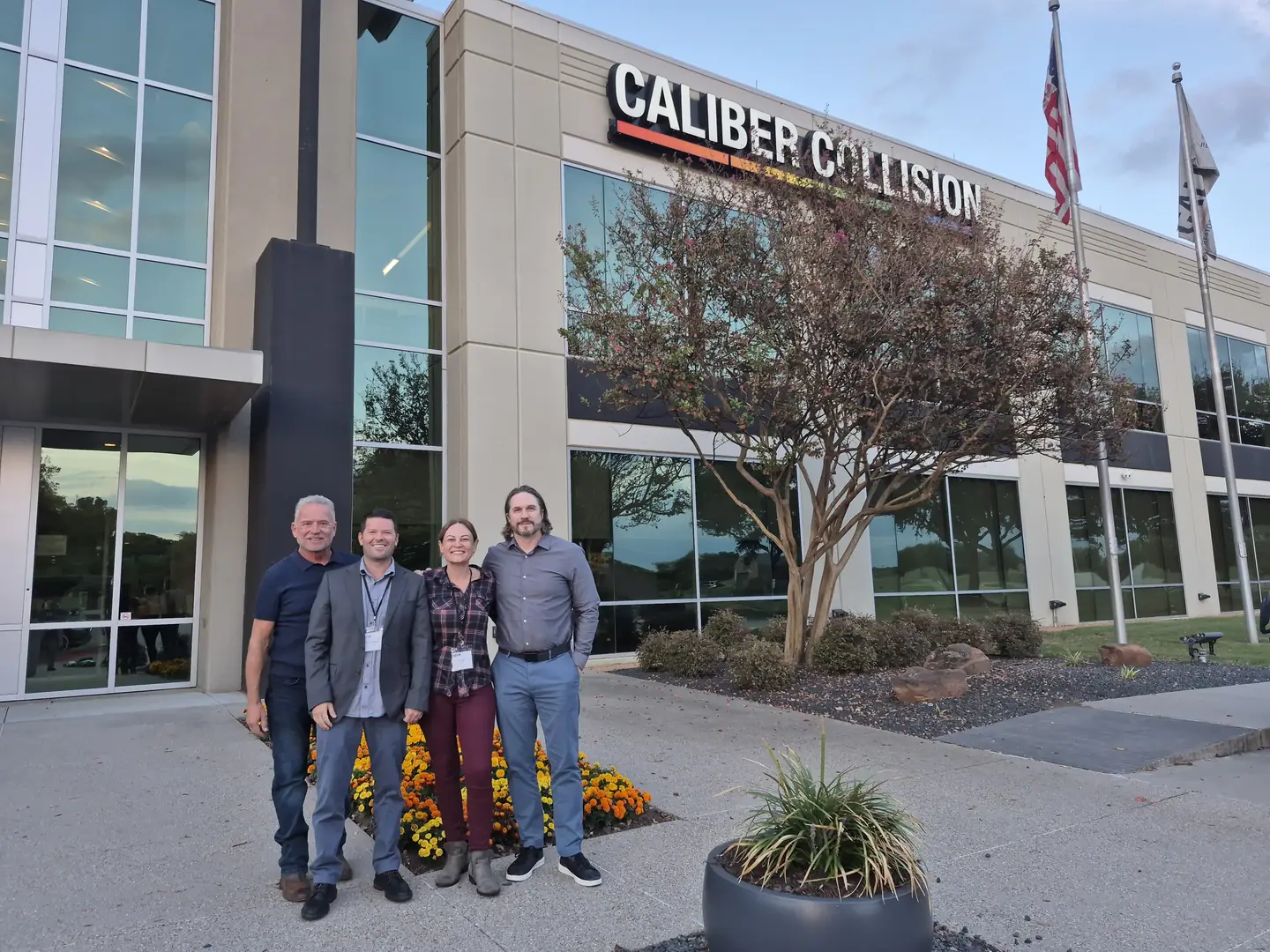
Last week, the Honeit team (Nick, Andy, James, and Ezgi) joined a packed room at Caliber Collision's Dallas headquarters for TalentNet Live. We spent the day surrounded by talent acquisition leaders, recruiters, and tech partners, catching up with old friends and meeting long-time screen connections face-to-face for the first time.
What made the day genuinely valuable wasn't any single keynote. It was how consistently the exact same questions surfaced, both on the main stage and in hallway conversations, across different organizations.
When the tools outrun the process
AI was everywhere, as expected. But the conversation has matured. Fewer people are asking whether AI can automate recruiting, and more are asking what happens when the technology moves faster than the people and processes around it. As our friends at NXTThing framed it in their recap, that tension set the tone from the opening conversation on the new talent acquisition operating model.
The practical answer that kept emerging is that speed moves the bottleneck rather than removing it. When sourcing, screening, and outreach accelerate, the constraint shifts to hiring manager feedback, approvals, and interview availability. A faster top of the funnel helps no one if candidates stall in the middle. That makes it a process and partnership problem as much as a technology one, and it points to a better starting question for any TA leader: where do human judgment and relationships matter most, and how do we organize everything else around those moments?
We also saw a more grounded picture of what comes next. Several of the technology partners in the room showed what agentic recruiting can look like when agents do real work alongside recruiters, rather than simply automating tasks. And a less glamorous concern kept coming up between sessions: candidate verification. Speed without a reliable way to trust what you are looking at is not much of a gain.
A partnership, in practice
We were grateful to share the stage with Lorena Melendez, a Honeit champion at Rosendin, and the conversation tied naturally into the day's focus on change management. Lorena spoke about moving hiring managers out of a client mindset and into a true partnership, one where they can see where candidates stand and share the stake in moving them forward.
"You move them from a client mindset to a partnership mindset."
Lorena Melendez, Rosendin
From our side, the lesson has been that adoption is never a day-one event. It takes curiosity, patience, and honest feedback in both directions, and much of what we build comes straight from teams like Lorena's telling us what they need.
We also talked about what hiring managers miss when all they see is a resume and a page of notes. Candidates are more than what is on paper, and a talent team's job is to help a hiring manager hear the person, not just read about them.
"Candidates are so much more than what they are on paper. They have a story. You cannot capture that in notes."
Ezgi Bilici, Honeit
Capacity, change, and the work that stays human
Recruiter capacity got the serious treatment it deserves. Instead of counting requisitions, the more useful approach weighs the real work behind each one: role level, specialized skills, location, and how hard a search has historically been. The goal is not replacing recruiters. It is giving good recruiters meaningfully more capacity. Adoption, it was clear, starts with leadership, training, and small teams testing new approaches with the people who actually do the work, not with a top-down rollout.
Change itself ran through the afternoon, from staying relentless about adapting, to pushing hiring managers to value transferable skills over the "perfect" background. One of the most moving moments came from a veteran who shared his own transition from the Army into civilian recruiting, and the work he now does to help others make that move. It was a reminder that behind every conversation about tools and process is a person trying to find their footing.
That is the part we keep coming back to. As the tools get more capable, the human side of hiring does not shrink. It becomes the differentiator.
What we're taking back
If there is one idea we would hand to a TA leader who could not be in the room, it is this: the tools will keep getting faster, and the constraint will keep moving toward the human parts of the process. How hiring managers decide. How recruiters spend their time. How a candidate is understood. How a team takes on something new without leaving anyone behind. The organizations that pull ahead will not be the ones with the most tools. They will be the ones that design the work around judgment, relationships, and trust.
The other lesson is about community. Events like TalentNet Live work because people show up for each other: old friends picking up where they left off, new connections that will become real working relationships, and peers, partners, and even competitors comparing notes in the same room. We were proud to sponsor both the DFWTRN happy hour and TalentNet Live, and we are grateful to Craig Fisher and TalentNet Media, Doug Roark and DFWTRN, Jim D'Amico and the Caliber Collision team, and every speaker, sponsor, and attendee who made the week what it was.
The best ideas in our industry still come from getting smart people in the same room. Dallas proved it again, and it is the work we will keep showing up for.