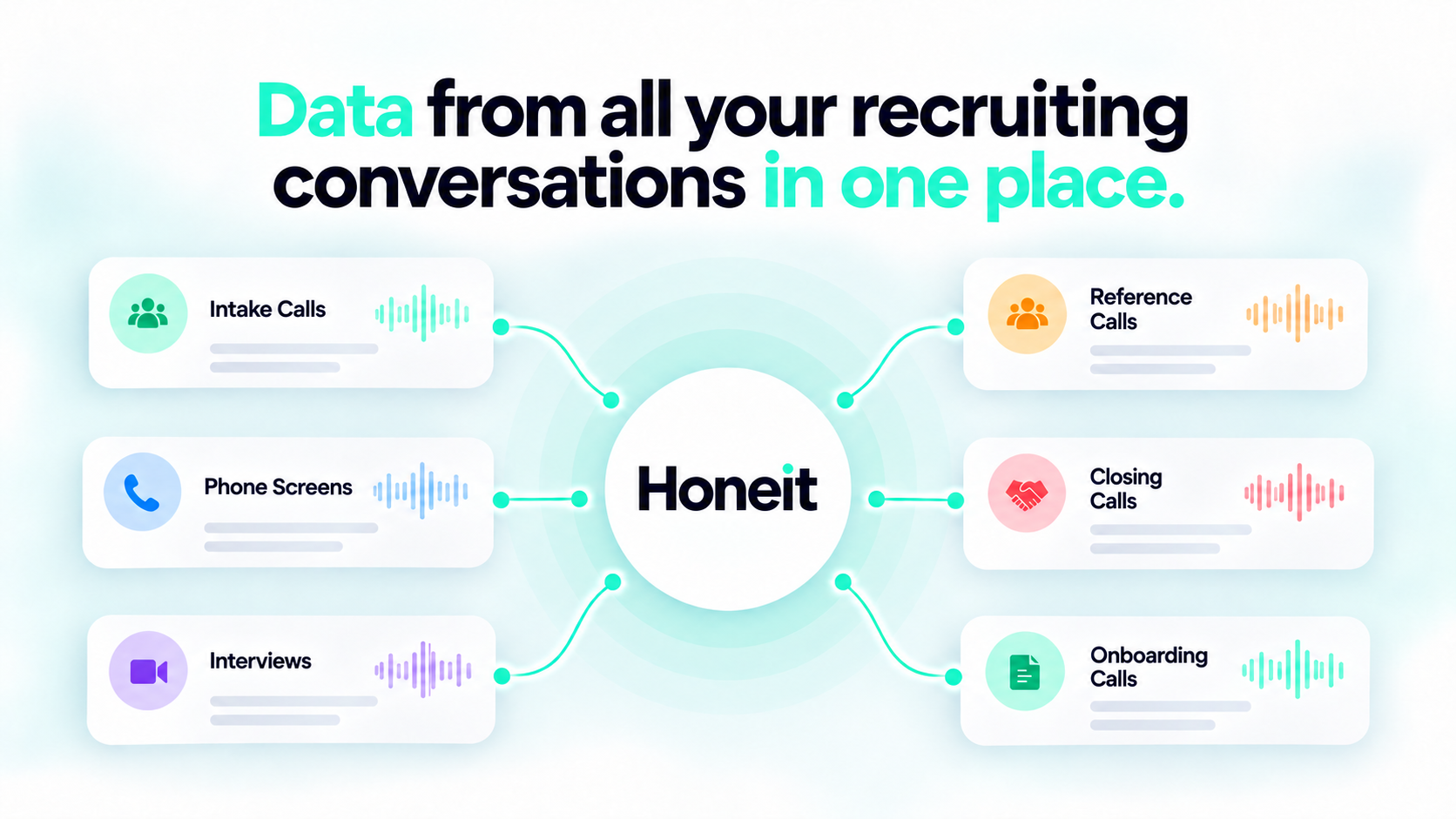
Recruiting is built on conversations. Hiring manager intake calls, recruiter phone screens, interviews, reference calls, closing conversations, and onboarding discussions all contain information that shapes hiring decisions.
Yet much of that information is still fragmented across recruiter notes, ATS fields, email threads, messaging platforms, call recordings, and individual memory. Important context gets summarized, duplicated, buried, or lost entirely as candidates move through the hiring process.
That creates an interesting opportunity for recruiting teams: what if the data from all of those conversations could live in one place and work together?
Every Recruiting Conversation Creates Valuable Data
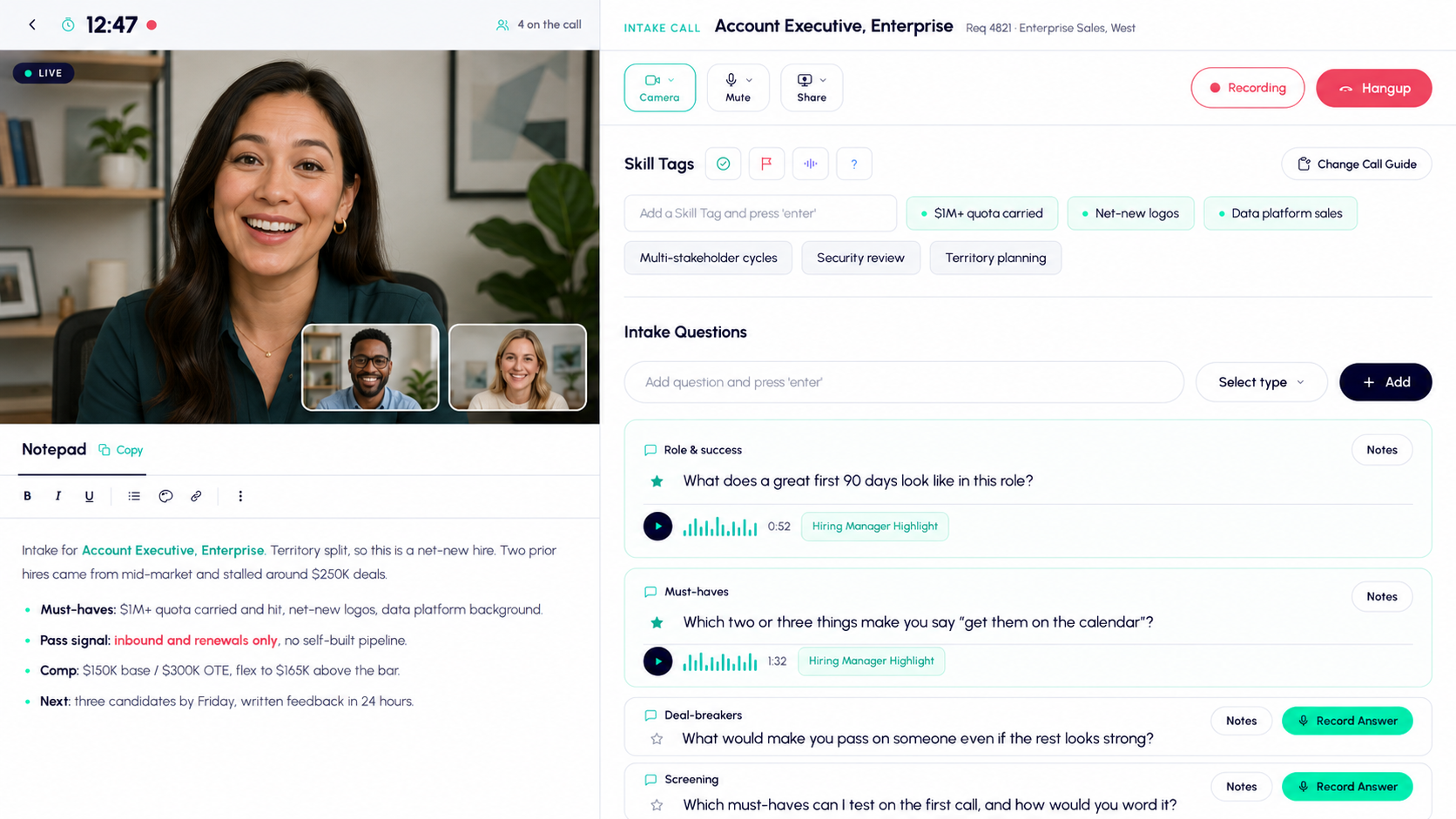
A hiring manager intake call often reveals far more than what appears in a job description. Recruiters learn which skills are truly essential, what problems the new hire needs to solve, how the manager defines success, and what may distinguish an average candidate from an exceptional one.
Candidate phone screens add another layer of intelligence. Recruiters hear how candidates describe their experience, motivations, compensation expectations, communication style, accomplishments, and career goals. Much of this context never appears on a resume or application.
Interviews provide deeper evidence through candidate answers, examples, structured scorecards, competencies, and hiring team feedback. Reference calls can validate previous observations, while closing conversations surface candidate priorities, concerns, competing opportunities, and factors that influence acceptance.
Even onboarding conversations can add useful context about expectations, candidate experience, and the transition from candidate to employee.
Individually, each conversation provides useful information. Connected together, they create a much richer view of the candidate, the role, and the hiring process.
Capture the Conversation Without Creating More Work
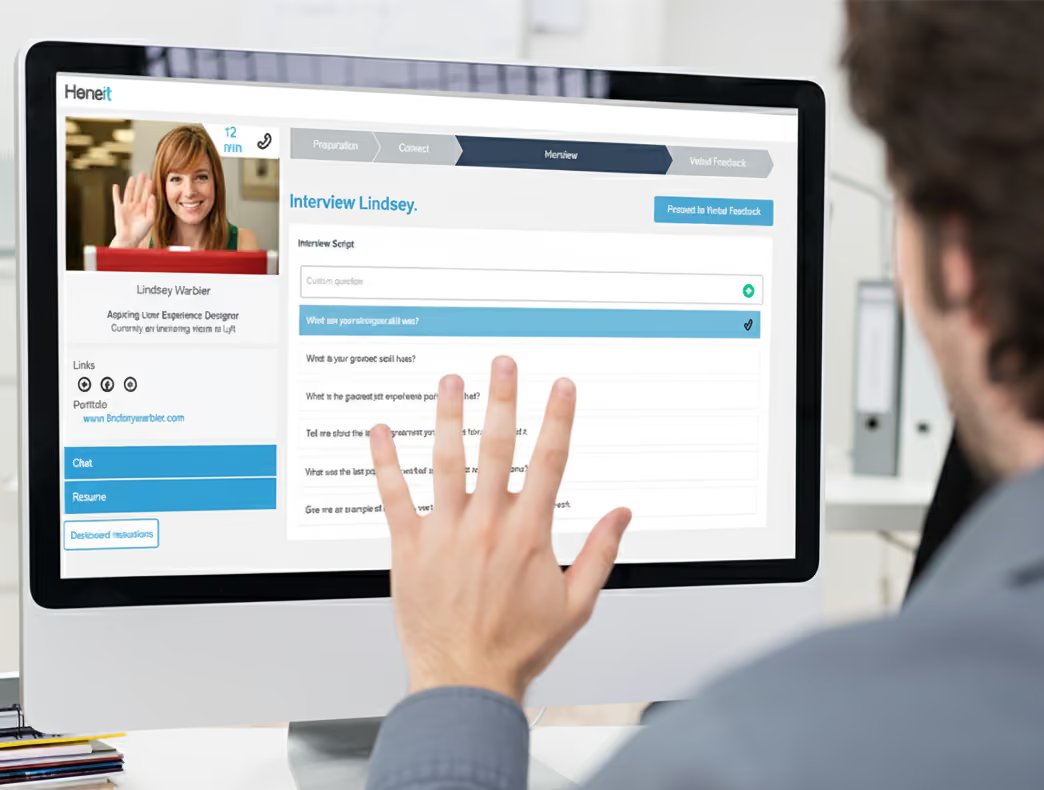
Historically, preserving this information has required recruiters to take detailed notes during calls and then transfer those notes into other systems afterward. That creates administrative work and forces recruiters to divide their attention between listening and documenting.
Interview intelligence changes that model.
When recruiting conversations are automatically captured, summarized, and organized, the important information from each discussion becomes available without requiring recruiters to recreate the conversation from memory. Candidate answers, interview highlights, scorecards, transcripts, and key insights can all become part of the hiring record.
The goal is not simply to capture more calls. The goal is to make the information inside those calls useful.
Make Recruiting Conversations Searchable
Once conversation data is captured in a structured way, recruiting teams can search it just like any other important source of information.
A recruiter can quickly find where a candidate discussed a particular skill, customer, technology, accomplishment, or compensation expectation. A hiring manager can revisit an answer from an earlier interview. A recruiter preparing for a candidate conversation can review what the hiring manager said during the original intake call.
This also makes it easier to connect information across stages of the process. Teams can compare candidate answers against the criteria established during intake, revisit concerns raised earlier in the process, and identify themes across multiple interviews.
Instead of asking, "Did we discuss that?" teams can find the actual conversation where it happened.
Share the Evidence Behind the Recommendation
One of the biggest opportunities is improving how information moves from recruiters to hiring managers.
A candidate may give a thoughtful five-minute answer during an initial screening conversation, but the hiring manager often receives only a few lines of recruiter notes. Valuable nuance, context, and evidence can disappear in the process.
With interview intelligence, recruiters can share the actual answers and insights behind their recommendations. Hiring managers can review important candidate responses, interview highlights, scorecards, and key moments without having to sit through an entire call.
This creates a more immediate form of interview collaboration. Recruiters can provide the context, hiring managers can review the evidence, and teams can make faster decisions with a more complete understanding of the candidate.
When Conversations Work Together
The real value emerges when each recruiting conversation is no longer treated as an isolated event.
Insights from the intake call can inform the recruiter screen. Information from the recruiter screen can shape later interviews. Interview responses can be evaluated against the criteria established at the beginning of the search. Reference feedback can validate themes identified throughout the process. Teams can also flag inconsistent answers or contradictions across multiple calls before they become a problem. Closing conversations can help recruiting teams better understand what candidates value and why they accept or decline offers.
Each conversation makes the next conversation more informed.
Over time, this creates a shared source of recruiting intelligence that gives recruiters, hiring managers, and recruiting leaders greater visibility into what is actually being discussed throughout the hiring process.
From Conversations to Hiring Intelligence
Recruiting teams already generate enormous amounts of valuable information every day. The challenge is making that information accessible and useful after the conversation ends.
By capturing, organizing, searching, and sharing the intelligence from recruiting conversations, teams can preserve more context, collaborate more effectively, reduce unnecessary interview steps, and make better-informed hiring decisions.
That is the opportunity behind interview intelligence: turning everyday recruiting conversations into a connected source of hiring data.
Data from all your recruiting conversations, in one place.
When hiring teams can access the right answers and insights at the right time, they can move faster without sacrificing the human conversations that make recruiting valuable.
Better conversations create better data. Better data supports better hiring decisions.
And better hiring changes everything.
See how Honeit works on your own reqs. Request a demo.